Pressure Tanks and Water Storage in Kerrville, TX
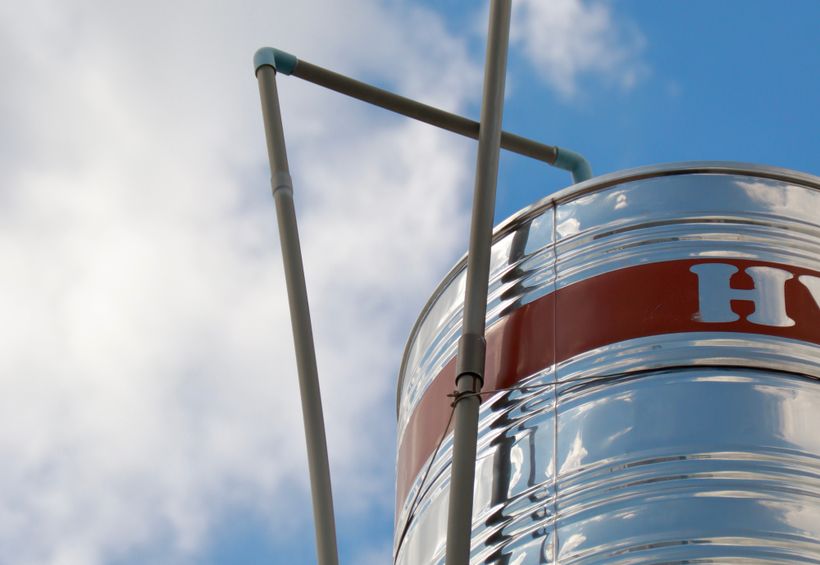
Kerrville Well Drilling sizes and sets pressure tanks and water storage systems across Kerrville and Kerr County, Texas. On the plateau, storage is not a luxury. Many Hill Country wells are low-yield, pulling only a few gallons a minute out of the rock, and a slow well cannot serve a household on demand without a reserve to draw from. Getting the storage and the pressure system right is what makes a slow well livable.
A pressure tank does one quiet, important job. It holds a cushion of pressurized air so you can draw water without the pump starting for every glass. When that cushion fails, the pump cycles constantly and wears out years early, which on a deep Hill Country well is an expensive thing to break. A waterlogged or dead pressure tank is one of the most common problems we find, and one of the cheapest to fix for the value it returns.
Why Slow Wells Need Storage
The rock under Kerr County does not give up water fast. A well that makes only a few gallons a minute cannot run a shower and a washing machine at once directly, but it can fill a large storage tank steadily all day long. A booster pump then pulls from that reserve to deliver full house pressure whenever it is needed. The well fills the bank while the house is quiet, and the bank covers the house when it is busy. That is how a low-yield plateau well becomes a working water system.
Sizing Storage to the Well
The slower the well, the more storage it needs to keep ahead of the household. We measure what your well actually yields, look at how the family uses water, and size the storage tank so it fills faster than the house empties it. Then we set the pressure tank and the booster to deliver steady pressure off that reserve. The result is a home that never notices its well is slow, because the storage does the work the rock cannot do on demand.
Pump cycling constantly, or a slow well that runs the house dry? Call (830) 555-0173.
Why does my pump run every time I open a tap?
That is the classic sign of a waterlogged pressure tank. A pressure tank holds a cushion of air so you can draw water without starting the pump every time. When it loses its charge or the bladder fails, the pump kicks on for every cup and cycles itself to death. On a deep Hill Country well, where the pump is expensive to reach, killing it early is a costly mistake. Recharging or replacing the tank fixes it and adds years to the pump.
My well only makes a few gallons a minute. Can it serve the house?
Yes, with storage, and this is common in the Hill Country. Many plateau wells are low-yield, giving only a few gallons a minute out of the rock. That is not enough to run two fixtures at once directly, but it is plenty to fill a large storage tank steadily around the clock. A booster pump then delivers full house pressure from the tank. Storage is what turns a slow Kerr County well into a water system a family can actually live on.
How big should my storage tank be?
Big enough to bank a day's water from a slow well and cover the household's peak demand. The slower the well and the higher the peak use, the more storage it takes. We size the storage to your well's real yield and your family's draw, not to a guess, so the tank fills faster than the house empties it. On a very low-yield well, generous storage is the difference between steady water and running dry by dinner.
Do I need a pressure tank if I have a storage tank?
Yes, they do different jobs. The storage tank banks the water the slow well produces. The pressure tank, downstream of the booster pump, holds the pressurized cushion that lets you draw water without the booster starting for every tap. A storage-and-booster system still needs a properly sized and charged pressure tank to run smoothly and to keep the booster from short-cycling. We set up both to work together.
Where do the tanks go on a plateau lot?
Pressure tanks live in a well house or utility space, off the ground and out of the sun. Storage tanks sit outside on a level pad, which on rocky, sloping Hill Country land sometimes means building the pad up so the tank sits true. We place them where the well fills them cleanly, the booster draws from them easily, and service access is simple. On steep lots that layout takes a little planning, and we do it before the tanks arrive.