Well Pump Replacement and Repair in Kerrville, TX
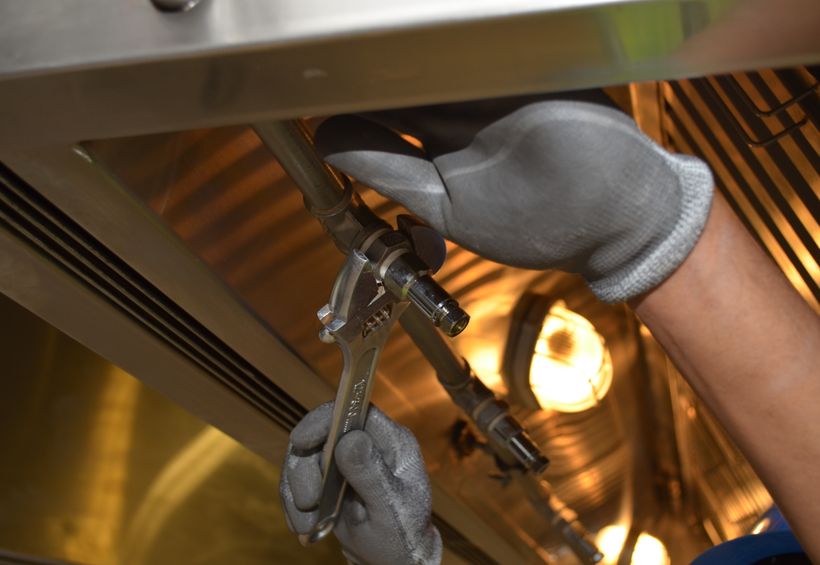
Kerrville Well Drilling replaces and repairs well pumps across Kerrville and Kerr County, Texas. When the water stops or the pressure fades, the pump is the first suspect, but on the plateau it is not always the culprit. A pressure switch, a waterlogged tank, bad wiring, or a well running low in a drought can all produce the same dead faucet. We test the whole system and fix the part that actually failed.
A submersible pump sits near the bottom of the well, and on a deep Hill Country well that can be many hundreds of feet down. When it fails you lose water fast, and this is year-round work, not seasonal. A pump can die in January as easily as a drought drops a water table in August, and a household with no water needs it back today. On a deep well, getting the diagnosis right before you commit to pulling pipe saves real money.
We Diagnose Before We Pull
Pulling a submersible on a deep plateau well is serious work, so we do not do it until we know we have to. The pressure switch, the tank, the capacitor, and the wiring at the panel are all above ground, and a fair share of no-water calls trace to one of them. We test those first. If the fix is up top, you never pay to pull hundreds of feet of pipe. If the pump or the drop pipe is the problem, then we pull it, and while the well is open we replace worn pipe and wire so the next trip down is years away.
Sizing the New Pump to a Deep Well
A replacement pump on a deep well is not a like-for-like swap off a shelf. The right pump has to lift water from real depth to full house pressure, sit low enough to stay under water through a drought, and match how much the household actually draws. Too small and the pressure sags; too large and it pulls the well down and short-cycles itself to an early grave at the bottom of a long hole. We match the pump to the well and set it right, so it lasts.
No water, low pressure, or a pump that will not shut off? Call (830) 555-0173.
How do I know if my well pump is failing?
The usual signs are sputtering air at the faucet, pressure that will not build, a pump that runs constantly, or a breaker that keeps tripping. Sometimes it is sandy or cloudy water. Any of those can be the pump, the pressure switch, the tank, or the wiring, and out here they often mimic a well that is simply running low in a drought. We test the system end to end and find the real cause before we start pulling pipe.
Pulling a deep Hill Country well sounds expensive. Is it always needed?
No, and that is exactly why we diagnose first. On a deep plateau well, pulling the pump can be many hundreds of feet of pipe, so we do not do it unless we have to. A dead pressure switch, a waterlogged tank, or a bad capacitor is an above-ground fix that needs no pulling at all. We test those first. If the fix is up top, you never pay to pull the well. If it is the pump or the drop pipe, then we pull it.
How long does a submersible pump last out here?
A quality submersible in a clean well commonly runs ten to fifteen years. Sandy water, an undersized pump, or constant cycling from a bad pressure tank cuts that short. When we replace a pump on a Kerr County well we look at why the old one died, because dropping the same pump into the same deep well and the same conditions just buys you a repeat trip down a very long hole.
Can you match a pump to a deep well?
Yes, and on a deep well it matters more, not less. The right pump has to lift water from real depth to house pressure without overworking, and it has to be set low enough to stay under water in a drought. Too small and the pressure sags; too large and it pulls the well down and short-cycles. We size the pump to the well depth, the water level, and the household draw, and set it at the right depth over the water.
Will you work on a well you did not drill?
Yes. Most of our pump work is on wells someone else drilled, often decades ago, and many Hill Country wells are old. We pull whatever is down there, match a new pump to the well, and replace worn drop pipe, wire, and fittings while the well is open, because on a deep well that is the only cheap time to do it. You get a well that runs and a clear record of what is actually in the ground.